Over at Raph Koster's Website, he's got a post up about "The algorithm or art." Using feedback to determine the "worthiness," whether economic or artistic, of songs, movies and games.
Back when I was at Cornell and actively involved in the student poetry writing scene there, we had weekly open-mic and other similar events, gang editing fests, various clubs, readings, etc. Many were quite participative. At one of these, we did an exercise once called the "Crowd Pleaser." Before the evening's main readings, we asked the members of the audience to propose and vote on a topics for new poems that would be written that night, for their immediate enjoyment.
Several topics were shouted out, and then voted upon. After that, we asked everyone to write on scraps of paper all the words that they associated with that topic. Those words were written on a chalkboard with numbers after them indicating how many people had chosen them. There were about thirty words, some of which had received as many as 7 or 8 mentions.
During the course of the night, four of us wrote poems on the topic at hand. If I remember correctly -- I don't have the piece anymore -- the subject was "daydreaming". We tried to incorporate as many of the words suggested by the crowd as possible. The poems were read at the conclusion of the evening.
The four pieces were all quite different, but the audience responded very well to each. We invited comment and sat around and talked about the experience with some of them afterward, and they said that it had felt quite interesting (one girl I knew said "tingly") to listen to poem that had been created expressly "for them," and had incorporated words provided by them. Some of the words hadn't been really easy, obvious ones, either. So it made it even more... tingly, I suppose... to hear them reflected back from the poet.
Is art better when it reflects something of what the audience already knows? Or knows it wants? We weren't making any money, so there was no "conflict of interest" between dirty commerce (that's sarcasm, children... I'm in marketing, remember) and pure art.
It was fun for me, as a poet, to write something that incorporated bits of the audience's brain. It was different. And I was certainly also using my own mind, my creative jelly, my poetic spirit in the process. There was no copping out. No crutch. No pablum. And the other three writers came up with very different results, even though the topic was the same and some of the ingredients.
This is not one of those posts where I have a nice, compact idea at the end or a suggestion. This is one of those posts where I just say some stuff and make an observation or two that kind of connects some weird points and then leaves you hanging to make your own conclusions.

Friday, December 1, 2006
Thursday, November 30, 2006
The box of purpose
 My son, Dan, a first-grader, was given a writing assignment earlier this week. The directions said, at the top of the sheet, "The sky is full of dark clouds. It is very windy. A light flashes across the sky. Make a prediction of what is going to happen."
He wrote, "A aeleein (alien) will come down and sae, 'We can't sleep on Mars.' And it is nite. There is a lot of litening and rane."
He got a smiley-face and an S+ (which I guess is good). From me he got a, "That's amazing!" He explained further to me that what he meant was that all the probes and robots and landers and stuff we'd sent up to Mars were making the light (the one mentioned in the directions), and that was what was keeping the alien/Martian awake.
He put in the rain and lightning because he was pretty sure that that was what was happening, too. On the back of the sheet he drew a UFO-style space-ship with a little alien coming out of it... wearing a stocking-cap.
Totally cracked me up. Be creative, but cover yer ass.
This blog is sometimes about being more creative. I'm lucky in that I get to do that kinda stuff as part of my job. I'm even luckier that I get to do it as a Dad. In this case, because it reminded me of an important rule about creativity -- look both ways... up and down the ladder of purpose.
Usually, when we are being creative, we start with a goal; a purpose. We want to write a story or a poem or a headline or a novel. We want to design a process or invent a better mouse-trap. We want to paint a picture, improve the city's light-rail system or craft puppets. Whatever the creative task, we almost always begin with a purpose-driven ideal. A statement in our heads of, "This is what I want to achieve."
Which is fine. Except that it's not. Because, when you are finished with almost any major creative undertaking and look backwards -- down the ladder -- what you will find is that you have accomplished many different, diverging and (hopefully) wonderful things. And so, if you only have one of them in mind at the beginning, you automatically cut yourself off from creative possibilities related to those other end states. You may also avoid equally beneficial end states. Which is (duh) sad.
Take Dan's assignment. The "real" purpose is to practice writing (and, in this case, specifically, "end marks," which we used to call "periods"). But Dan's still too young to just fill-in-the-blank without having some fun with it. And that's what amused and delighted me. Of course the light in the sky is all the crap we've put on Mars, and of course it's annoying the aliens. So they come down to complain. Beautiful...
What is the secondary purpose of this assignment that Dan discovered? To be a springboard for a story. Now, the authors of the assignment probably felt that they were giving kids a fairly straightforward prompt. It's a storm, eh? Well... What if they'd been a bit less direct? I mean, Dan is *my* kid, after all. I train him to be a bit more berzleplazzgick than the norm, so while I'm thrilled he found the aliens in his homework, I'm not surprised. With a bit more planning (and a bit less rigidity), though, this assignment could have been a story-seed for a much greater percentage of Dan's classmates.
I run into this all the time at work with projects that have both a product goal (something that needs to get done) and a repeatable process requirement (the way that we do things). Can we improve the process? If you don't assume the answer is, "Yes," you leave money on the table. So the purpose of any given project is to both "do the thing" and to find out how to do it better, eh?
Examples. We need examples. I hate windy blog posts without examples and I write too many of them myself. Here we go:
- When you write something at work, Purpose(1) is often to make a particular point to a particular audience. Can that audience be multiplied? Can you invite someone else to join you in the writing process? Can you radially change the writing to fit another medium?
- If you are drawing or painting or otherwise being artistically creative, Purpose(1) is to create the object. The explicit Purpose(2) is often to improve that craft skill. Can you involve prayer or meditation in that activity or time? Can you invite a friend or child to join you, making it a shared, social event? Can you film yourself doing your thing so you can watch it later and learn from that experience? Can you create on a radically new medium that you were planning on throwing out (pizza box, old CD ROMs, rags, coffee filters) in order to experience the simple thrill of new textures?
- If you are writing creatively (let's say a poem), can you force yourself to include details that require study and new learning?
- If you are doing a hobby craft (scrap-booking, sewing for fun, jewelry design, etc.), can you think of ways to make multiples of the same thing more quickly in order to monetize your product? Can you invite someone else to learn from you or to learn from? Can you explore literature or movies that include your craft before or during the process? Or other cultures? Can you incorporate hidden ("DaVinci Code?") meanings into your work?
My point is just this... Before beginning any creative venture, write down what it is you are trying to accomplish. Your first purpose. That's important. Because you clearly want to get that done. But don't let that goal be a restrictive box. Let your creativity be bigger than that.
Ask yourself, "When I have walked the road to this goal, what else will I have seen?" And then, before you begin, widen the road.
Sunday, November 26, 2006
Powerpoint is not evil. You are. Yes, you.
 A wonderful coworker of mine (if she gives me permission, I'll edit this and name her) pointed me to a good blog post about Edward Tufte, the evils of Powerpoint, information design, the ability of well-designed misinformation to intentionally mislead, and of badly designed information to unintentionally mislead. That post in turn links to another one that talks about how Powerpoint is now being taught in schools.
 As usual, the angle is that the "cognitive style of Powerpoint" -- bullet points, illustrations, short headlines, outlined organizational style presentations -- is sapping our kids' attention spans and their ability to put together long, complex essays and thought pieces.
I like much of what Tufte has to say in the same way that I like much of what Freud has to say. It is interesting at the level of "I hadn't thought of things in that manner," but I think their exact prescriptions need to be taken with food and not before operating heavy machinery. Good stuff at a macro level, but not necessarily useful when building a garage.
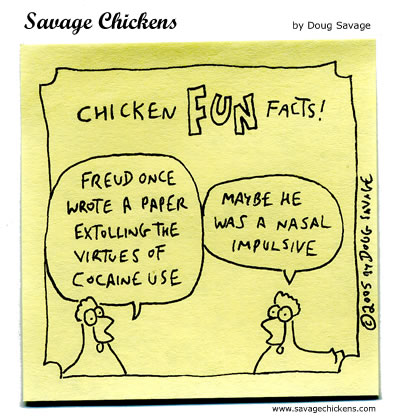
Do I think that Powerpoint can lead to lazy thinking? Yes. But so can typewriters that don't let you erase easily.
The greatest single gift God ever gave my writing was the "Backspace" key. In the two years at college I had before I owned my own PC, when my writing tool was an electric typewriter that required weird-o correcting tape that sometimes (read: almost never) worked, my efforts at editing were limited to what I bloody-well-felt-like based on my time available, energy level and sobriety. I did a first draft by hand, on yellow legal pads, and then did as good a job as possible on the typewriter. If I had a brilliant idea on how to change the first paragraph, but was 2/3 of the way down the piece... 9 times out of 10 my response was, "Screw it."
So. Powerpoint. Children. Thinking. The medium is the message. Right...
When I was in college, I typed around 60 words-per-minute. That was after having taken one 10 week high-school typing course. Now, 20-odd years later, I type around 105 wpm. And the college kids I know beat me most days. My point? Easy backspace don't mean bad typing. It means more typing. Which means faster typing. Which means more writing, more editing, more thinking, more chances to say, "Hmmm... I think that paragraph would go better... there... and I think I'll move stuff around so that the conclusion is actually the intro, and we'll add two more examples..." etc. etc. You get the point.
Now... Does the backspace key guarantee that I'll do that? Of course not. But it makes it more bloody likely than it did when I had to use weird-o correcting tape.
With Powerpoint, you are given a number of templates. Nice. We love templates! Or, let me be clear. YOU love templates. I hate them. Because they are often so off-brand for what I have to do in my day job that my crew needs to spend many hours un-templatizing all kinds of crap in Powerpoint, Word, etc. so that it looks like what we (Marketing Gods) need it to look like rather than what Mr. Microsoft and you default it to look like. Not your fault. Not their fault. It has to look like something when it comes out of the barn, right?
What does Tufte and the crew want? For Powerpoint to default to a blank page? We call that a "word processor." Here's the thing... you can create presentation slides in MS Word. You can create them in Excel. You can create them in Photoshop or Quark or Illustrator. It's a pain, but you can do it. But, in the past, people used to create these funky overhead transparencies and, before that, things called "slides" that had some similar characteristics.
Bullets. A few bits of text per slide. A couple images. Short headlines. Outline organization.
It's not like Microsoft decided, "We're going to create a nation of drooling, 3-bullet point mesmerized dummies." The format has been around for 50+ years. Powerpoint is just a tool that makes it fast.
- If you want to create something [fast] with reams of text, use Word.
- If you want to create something [fast] with mainly images, use Photoshop
- If you want to create something [fast] with mainly graphs and charts, use Excel
If you want to do a bunch of all those things, Alt-Tab between your favorite applications.
And if you want to learn how to think like a grown-up, learn how to use a couple hundred different tools, and how to solve a couple thousand different types of problems, and stop whining that a hammer doesn't screw in light bulbs very well.
When I was a junior in high-school, my English teacher, Ms. B_____, took us through the whole sha-bang-a-bang for researching and writing a major paper. The research, the outline, the 3x5 cards, the notes, the first draft, the revised draft, the final, the bibliography, etc. etc. We spent 8 weeks getting that process down pat. Then we did 5 more papers just like that... except we didn't actually write the papers. We did every single part, except the drafts; no first, revised or final. She knew we could write; we were an AP writing class. We wrote essays in class and for our exams. But for our major papers, she knew it was more important that we spend the time learning and practicing the process than the product. She taught us how to do it, not just to do it. Best and hardest writing class I ever had.
You want kids to use Powerpoint the "right" way? The way it was intended? To convey information in bite-size, read-able at a distance chunks in a Holiday Inn ballroom over rubber chicken? Then leave it as-is. If you want them to use Powerpoint as a creative tool, make 'em:
- Design a new template from scratch
- Prepare a presentation that has nothing to do with the usual "condensed info / book-report" format kinda thing; for example, present a short story or a poem or a music video using Powerpoint
- Use Powerpoint as the vehicle for a game like hangman or a puzzle of some kind
- Use it to create seating charts, flowcharts, planning charts or other non-verbal materials
- Have a duel with two (or more) computers hooked up to projectors where the kids have to user Powerpoint to create reactions to what the last team did
- Use Powerpoint and a projector and as many pages as you want/need like a wipe-board
- Copy-and-paste text and images from appropriate Web pages to Powerpoint slides and add speaker's notes and text to help annotate Web adventures as you navigate research projects on the Web. Save the Powerpoint presentations along with URL links as records of your travels
You see, Powerpoint is good for pretty quickly putting basic, kinda crappy looking (i.e., not heavily formatted) text and images up on a screen in short order. It's "sketchy" as opposed to "painty" or "write-y."
Don't give kids a hammer, show 'em how to pound nails, and then complain when all they can do with it is pound nails. Hammers are good. Nails are good. You just need to use them in combination with saws and glue and yer friggin' imagination to build all kinds of projects.
Nothin' wrong with Powerpoint. We all just need to think about all our tools a bit more widely. Especially when we're putting them into the hands of kids.
Monday, November 13, 2006
Children's Book Week: Reading Is
I've known my wife since I was 16. We've dated (on and off) since 17. We've been married for 15+ years. We share a brain. This is a good thing. There are so many times that we don't have to finish a sentence, a thought, an idea, a joke. It makes things not just easier, but more fun. That's because, even after all this time, we really like each other.
Lots of short-hand gets developed during a relationship like ours. One of the most succinct ways, for example, that she once conveyed an entire world of disdain, dislike and general, "Who gives a dang?" about somewhat she'd met at work was carried in the simple phrase:
"He doesn't read."
I can't imagine a world without a stack of books waiting in the wings. I can't imagine not always having at least two (usually four or nine) books "going" at the same time. I can't imagine not talking about books with friends. I can't imagine not thinking of books as friends.
Now I have a son. We read to him. To be fair, Chris does 90% of the reading to him. I jump in and do it when she can't, or when I feel like it. It has more to do with circadian rhythms and work schedules than desire. But he's got about 10,000 books, and is learning to read (he's in first grade), and loves to be read to and to make up his own stories (he's working on a sequel story to Star Wars Episode VI).
So... it's Children's Book Week. Aside from the love and respect of my parents, nothing other than reading has had a greater impact on my life. So I'm joining a bunch of bloggers (some here) where I work, and we're celebrating by blogging about the books that most influenced us as kids. Pass it on and blog about y'all's most cherished reading memories (all book links here go to www.WorldCat.org. Respect!). In no particular order, here's some of my faves.
I'm not sure what it was about this book that made me love it so much, but I did. And now Dan, my son, does, too. It's his most requested bedtime book when I'm reading to him. It's about a boy, Andrew Henry, who loves to build things. Wild, contraption-y things. Things that annoy his family. So he leaves, and builds special houses for himself and all his friends in his meadow. A little village of specialty houses that are customized for the pursuits of his bird-loving, music-playing, frog-jumping, etc. buddies. A wonderful story about creativity and inventiveness.
I know it's a big deal now, because of the movies. But when I was in the 4th grade... not so much. I mean, it's always been a classic, but I didn't hear about it until our pastor, Rev. Guinn, gave my folks the first two books in the Narnia series for me to read. At the time, for whatever reason, I was only reading biographies for kids. I hadn't read much fiction at all, besides whatever had been assigned. After reading Narnia, however... boom. I was hooked on fantasy, and then sci-fi, for life. Not that I stopped reading other stuff, but entire "alternative worlds" opened up to me because of the Narnia books.
This book is on the list because it is the first book I remember actively disliking; I may even have hated this book. I'm not sure I hate it today, but I still certainly dislike it. Quite a bit. OK, I hate it. Don't get me wrong; I love Uncle Shelby. Where the Sidewalk Ends, A Light in the Attic, Who Wants a Cheap Rhinoceros, and (amazingly funny), Uncle Shelby's ABZ Book. But I read "The Giving Tree," and was deeply disappointed. Why? Because the tree kept giving everything to the boy, but it didn't make the boy happy. So, obviously, giving everything directly to the boy wasn't what the boy really needed. The tree was (although I didn't have the words for this concept at 9 or 10 when I first read it) an "enabler." And everyone who read the book seemed to think of it as a simple, wonderful story about a tree that gave, selflessly, out of love for the child. It made me mad and it made me tell people what *I* thought was the point of the book, which was that simply doing what you think is the right thing for someone, even if it seems selfless, may not be the right thing for them. I mean, come on! The kid was a miserable brat. This is the first book I ever deconstructed. Very important for me.
These were the stories that proved poetry to me. Yes, there are poems at the end of the tales... but within the stories themselves, there is musical language and rhythm and an attention to the flow of language that convinced me that, yes... we must be most careful with our syllables as well as our words. With the round lobes of our tones and the slick, slither of our consonants. For what is more beautiful in a children's book than:
Story plus the liquidity of language. Lovely.
I'm not sure what age group "Children's Book Week" ends at, but they include some Harry Potter junk, so I'll imagine that it goes up through fifth or sixth grade at least. I was 11 or 12 when I first read "The Cask of Amontillado," "Fall of the House of Usher," and "The Pit and the Pendulum," and, like the Narnia books... they changed how and what I read and, therefore, probably, my life. I would later read and enjoy other great horror authors like Stephen King and Clive Barker... but Poe was the one that made me understand the joy of the scare. The first time through "The Masque of the Red Death..." Oooh! That was a good, creepy night under the covers with a flashlight.
Really, this entry should be titled, "Everything by Ray Bradbury." Bradbury was the first author I devoured. Those of you who read understand this term. When we find a writer whose work hits us like a hypo of heroin, we do not taste, we do not nibble... we devour. I read everything by Bradbury in the Pollard Junior High library in a row. Then on to the Needham Public Library. Then to the book store. After Bradbury, many other authors would fall into this category of, "Read one, then all." But Ray was my first author addiction.
I was in first or second grade when this came out and someone in my life got it for me. My best friend, Kenny, and I sat in the driveway one day, spiral notebooks, markers and this book spread out, and, indeed, made a world. Before the concept of cut-and-paste meant Ctrl+V and Ctrl+P, we took the simple, geometric instructions from Ed Emberly's patterns and copied them over and over in order to create a world beyond anything we thought we had inside us. I am not, nor will I ever be, a true "artist" in the sense of the word most people have. But I am not a horrible designer. The ability to take pieces/parts and lay them out alongside each other in a way that is meaningful and (sometimes) attractive doesn't always elude me. Ed introduced me to that.
I don't remember which edition, version or author my grandpa read to us from, summer nights in Alexander, NY. I just remember that we had to be read Robin Hood stories, because Grandpa was a fletcher, bowyer and archer (among about a million other talents). The fact that Robin and Grandpa shared these (to me) arcane abilities, made the stories so much more... visceral. The Robin Hood stories were exciting and funny and got us (me and my bro, John) all worked up at bedtime. In order to get us to go to sleep, then, Grandpa would read to us from the encyclopedia. The same reference every time. An entry about monarch butterflies. You want to put two young kids to sleep quickly? Read the same encyclopedia entry to them a couple dozen times. Nicely done, Grandpa. Good, rousing tales for fun and adventure... then off to sleep in about 9.8 seconds.
That's it for now. If I can jog my memory, I'll add more.
And this is a blog-wave, too, btw... if you love books and support reading, please pass this on! Include a link to the Children's Book Week, and links to the books you love (we'd prefer you use www.WorldCat.org, of course, but can't complain if you have another, preferred site).
No other single habit will more greatly impact a kid's life than that of sustained, wide reading. You just can't enlarge they little brain better in any other way.
Lots of short-hand gets developed during a relationship like ours. One of the most succinct ways, for example, that she once conveyed an entire world of disdain, dislike and general, "Who gives a dang?" about somewhat she'd met at work was carried in the simple phrase:
"He doesn't read."
I can't imagine a world without a stack of books waiting in the wings. I can't imagine not always having at least two (usually four or nine) books "going" at the same time. I can't imagine not talking about books with friends. I can't imagine not thinking of books as friends.
Now I have a son. We read to him. To be fair, Chris does 90% of the reading to him. I jump in and do it when she can't, or when I feel like it. It has more to do with circadian rhythms and work schedules than desire. But he's got about 10,000 books, and is learning to read (he's in first grade), and loves to be read to and to make up his own stories (he's working on a sequel story to Star Wars Episode VI).
So... it's Children's Book Week. Aside from the love and respect of my parents, nothing other than reading has had a greater impact on my life. So I'm joining a bunch of bloggers (some here) where I work, and we're celebrating by blogging about the books that most influenced us as kids. Pass it on and blog about y'all's most cherished reading memories (all book links here go to www.WorldCat.org. Respect!). In no particular order, here's some of my faves.
 Andrew Henry's Meadow, by Doris Burn
I'm not sure what it was about this book that made me love it so much, but I did. And now Dan, my son, does, too. It's his most requested bedtime book when I'm reading to him. It's about a boy, Andrew Henry, who loves to build things. Wild, contraption-y things. Things that annoy his family. So he leaves, and builds special houses for himself and all his friends in his meadow. A little village of specialty houses that are customized for the pursuits of his bird-loving, music-playing, frog-jumping, etc. buddies. A wonderful story about creativity and inventiveness.
 The Lion, the Witch and the Wardrobe, by CS Lewis
I know it's a big deal now, because of the movies. But when I was in the 4th grade... not so much. I mean, it's always been a classic, but I didn't hear about it until our pastor, Rev. Guinn, gave my folks the first two books in the Narnia series for me to read. At the time, for whatever reason, I was only reading biographies for kids. I hadn't read much fiction at all, besides whatever had been assigned. After reading Narnia, however... boom. I was hooked on fantasy, and then sci-fi, for life. Not that I stopped reading other stuff, but entire "alternative worlds" opened up to me because of the Narnia books.
 The Giving Tree, by Shel Silverstein
This book is on the list because it is the first book I remember actively disliking; I may even have hated this book. I'm not sure I hate it today, but I still certainly dislike it. Quite a bit. OK, I hate it. Don't get me wrong; I love Uncle Shelby. Where the Sidewalk Ends, A Light in the Attic, Who Wants a Cheap Rhinoceros, and (amazingly funny), Uncle Shelby's ABZ Book. But I read "The Giving Tree," and was deeply disappointed. Why? Because the tree kept giving everything to the boy, but it didn't make the boy happy. So, obviously, giving everything directly to the boy wasn't what the boy really needed. The tree was (although I didn't have the words for this concept at 9 or 10 when I first read it) an "enabler." And everyone who read the book seemed to think of it as a simple, wonderful story about a tree that gave, selflessly, out of love for the child. It made me mad and it made me tell people what *I* thought was the point of the book, which was that simply doing what you think is the right thing for someone, even if it seems selfless, may not be the right thing for them. I mean, come on! The kid was a miserable brat. This is the first book I ever deconstructed. Very important for me.
 Just So Stories, by Rudyard Kipling
These were the stories that proved poetry to me. Yes, there are poems at the end of the tales... but within the stories themselves, there is musical language and rhythm and an attention to the flow of language that convinced me that, yes... we must be most careful with our syllables as well as our words. With the round lobes of our tones and the slick, slither of our consonants. For what is more beautiful in a children's book than:
Still ran Kangaroo--Old Man Kangaroo. He ran through the ti-trees; he ran through the mulga; he ran through the long grass; he ran through the short grass; he ran through the Tropics of Capricorn and Cancer; he ran till his hind legs ached. He had to!
Still ran Dingo--Yellow-Dog Dingo--hungrier and hungrier, grinning like a horse-collar, never getting nearer, never getting farther; and they came to the Wollgong River. Now, there wasn't any bridge, and there wasn't any ferry-boat, and Kangaroo didn't know how to get over; so he stood on his legs and hopped. He had to!
He hopped through the Flinders; he hopped through the Cinders; he hopped through the deserts in the middle of Australia. He hopped like a Kangaroo.
Still ran Dingo--Yellow-Dog Dingo--hungrier and hungrier, grinning like a horse-collar, never getting nearer, never getting farther; and they came to the Wollgong River. Now, there wasn't any bridge, and there wasn't any ferry-boat, and Kangaroo didn't know how to get over; so he stood on his legs and hopped. He had to!
He hopped through the Flinders; he hopped through the Cinders; he hopped through the deserts in the middle of Australia. He hopped like a Kangaroo.
Story plus the liquidity of language. Lovely.
 The Tales of Edgar Allen Poe, by himself
I'm not sure what age group "Children's Book Week" ends at, but they include some Harry Potter junk, so I'll imagine that it goes up through fifth or sixth grade at least. I was 11 or 12 when I first read "The Cask of Amontillado," "Fall of the House of Usher," and "The Pit and the Pendulum," and, like the Narnia books... they changed how and what I read and, therefore, probably, my life. I would later read and enjoy other great horror authors like Stephen King and Clive Barker... but Poe was the one that made me understand the joy of the scare. The first time through "The Masque of the Red Death..." Oooh! That was a good, creepy night under the covers with a flashlight.
 Something Wicked This Way Comes, Ray Bradbury
Really, this entry should be titled, "Everything by Ray Bradbury." Bradbury was the first author I devoured. Those of you who read understand this term. When we find a writer whose work hits us like a hypo of heroin, we do not taste, we do not nibble... we devour. I read everything by Bradbury in the Pollard Junior High library in a row. Then on to the Needham Public Library. Then to the book store. After Bradbury, many other authors would fall into this category of, "Read one, then all." But Ray was my first author addiction.
 Ed Emberly's Drawing Book: Make a World
I was in first or second grade when this came out and someone in my life got it for me. My best friend, Kenny, and I sat in the driveway one day, spiral notebooks, markers and this book spread out, and, indeed, made a world. Before the concept of cut-and-paste meant Ctrl+V and Ctrl+P, we took the simple, geometric instructions from Ed Emberly's patterns and copied them over and over in order to create a world beyond anything we thought we had inside us. I am not, nor will I ever be, a true "artist" in the sense of the word most people have. But I am not a horrible designer. The ability to take pieces/parts and lay them out alongside each other in a way that is meaningful and (sometimes) attractive doesn't always elude me. Ed introduced me to that.
 Robin Hood, ???
I don't remember which edition, version or author my grandpa read to us from, summer nights in Alexander, NY. I just remember that we had to be read Robin Hood stories, because Grandpa was a fletcher, bowyer and archer (among about a million other talents). The fact that Robin and Grandpa shared these (to me) arcane abilities, made the stories so much more... visceral. The Robin Hood stories were exciting and funny and got us (me and my bro, John) all worked up at bedtime. In order to get us to go to sleep, then, Grandpa would read to us from the encyclopedia. The same reference every time. An entry about monarch butterflies. You want to put two young kids to sleep quickly? Read the same encyclopedia entry to them a couple dozen times. Nicely done, Grandpa. Good, rousing tales for fun and adventure... then off to sleep in about 9.8 seconds.
That's it for now. If I can jog my memory, I'll add more.
And this is a blog-wave, too, btw... if you love books and support reading, please pass this on! Include a link to the Children's Book Week, and links to the books you love (we'd prefer you use www.WorldCat.org, of course, but can't complain if you have another, preferred site).
No other single habit will more greatly impact a kid's life than that of sustained, wide reading. You just can't enlarge they little brain better in any other way.
Saturday, November 4, 2006
Google buys JotSpot, its 2nd wiki: service as marketing, experience as brand
I'm a fan of wikis. For those not familiar, a wiki is simply a Web site where users can edit the content on the Web pages themselves. Another important key feature of most wikis is that they are easily, internally hyper-linked. You can create a new page using a simple key or code; depending on the wiki engine's syntax, that may involve the use of "camel case" -- putting a word together with multiple, mashed caps, like NewPage -- or some kind of bracketing, like [New Page]. Either way, it makes it easy for some population greater than that of the Web Masters to easily add content and links to a site. Mui bueno.
I did a bunch of research on various wiki farms and engines for a consulting client awhile back. As part of that, I investigated JotSpot when it was in beta (an actual beta, not the kind of perenial beta that we see these days) as one example of a sophistcated wiki farm/service. I had some back-and-forth emails with Joe Kraus, CEO and founder of Jot, and the original president of Excite, as well. Their original, proposed pricing model was one based on a per-user (per-seat) charge. I commented to Joe that I thought that was not a great idea, as the value of wikis is established by the number of users. Charging for bandwidth, features or drive space... sure. Those are commodities. But users? Don't put any bars on that. To a degree, they listened and the Jot model ended up with tiered pricing; the cheapest "infinite users" subscription was $70/month. Which was still a heckuvalot less expensive than many of their competitors in the "corporate" or (as Jot calls it) "application" wiki space.
Well... now it's a lot less expensive. Google has bought Jot, and all their current customers will pay... zero. Niente. Nada. Diddly. The usual Google charge for consumer-level services, eh? You can't get a new Jot account until they've "migrated into Google's systems," but... one suspects a free option will be available there, too.
Them's the facts. As always, you now get a heapin' helpin' of my speculation.
Let's start with how last March, Google bought their first wiki... Writely. Now known as "Google Docs and Spreadsheets."
Oops. I'm sorry. Did I say that when they bought Writely, that was a purchase of their first wiki? Oh, dear. I'm sorry. I have to go back now and read the approx. 1,800,000 results on Google for the phrase "google buys writely" and check... Nope. They all say that Writely is a "browser based word processor," or "online word process," or "Web-enabled word processor." There are a couple blog posts and articles that discuss Writely's "collaborative word processor capabilities," and a very few smaller outlets that notice that Writely is, in fact...
A good, Flash-enabled, WYSIWYG-front-end wiki.
If you have a Gmail account, you can use Google Docs and Spreadsheets. Go try it. You can create a doc or spreadsheet and save it to your account. It has a unique URL with a long, weird, Gmail/email lookin' name. But you can assign it a document-looking name inside your account. And you can link from file to file with a nice, easy drop-down. And to outside URLs. And you can share those documents with others for editing.
And those "documents" live on the Web. On Google's servers. You say "document," I say "Web page." Potato, potato.
Folders vs. Pages vs. Users
In the MS-DOS and Windows world, we have folders and sub-folders. In a Web world, we have pages and sub-pages. In a wiki world, we have users, groups and permissions. This is an extremely important difference. It is a difference of focus and use. It may be (I say "may" with a huge grain of salt and much humility) the main difference between Microsoft and Google.
In a Windows/Web/Folder-centric universe, tasks and relationships play 2nd-fiddle to files. You have to put "the thing" somewhere, and then know where it is, be able to get to it, be able to move it, or copy it, or delete it in order to be effective with it. In a wiki-centric universe, yes... stuff still needs an original place to live. But the emphasis is on the connections made to it, the relationships of the people making the connections, and the meta-data related to those people.
Here's a detail to make this (hopefully) a bit clearer. One of the neat things about JotSpot was that every page on their wikis was assigned a "key word," which, when appended to the URL of the page, turned it into an email address. So you could send an email *to* that page of the wiki. The message was then stored like a comment on that page. Even if your user-level didn't give you permission to edit a page of the wiki, the admin could turn on the "email to page" function and allow folks to append comments that way.
So... let's say you've got a project going and you create a wiki page to be the "central repository" for all information related to that project. Project Manager John Jacob creates the page and has full editorial control over it. He gives write/edit access for that page to the members of his team, and allows everyone in the department to view the page and add comments, but anyone outside his department cannot view anything except the page description, with a note to call him if they need "in on it." It's a "porous intranet," so some pages are open to the public; this one isn't at all. Without a login/password, you see nothing. All of the pages created as sub-pages directly from the main project page "inherit" the permission structure John set up (last I checked, Jot doesn't do this, but EditMe does, it's very handy, and, I hope, Jot catches on). But the authors of the sub pages can, if they need to, alter the specific permissions of those pages in order to invite other individuals who aren't included in the original, or keep out those who are. For example, Creative Director Mandy Marr creates a page for all documents that will need to be reviewed by the Legal Department and gives permission for Chief Counsel Cliff Cramer to view/edit that page. He cannot, however, "step upwards" and see/edit stuff in the main page, just because she's added him to the sub-page permissions.
Also... some of the sub-pages that are protected from other departments will have links that go to pages that aren't. No big deal. Or they'll have links to pages with other overlapping permissions. Again... NBD. Each page's permission is defined by what makes sense for that page. A page that has to do with Legal and HR but not marketing will have those permissions, etc. etc.
Now... let's add in a concept like document approval. Tack on an application that adds an "approve attached document" level of permission as well as view/edit, and you've got a work-flow tool. Jot includes a bunch of similar tools at this point. And they've just been bought by Google, which has a built in calendar, email, etc. And Google is also providing "Google Aps" that plug into your web site.
Imagine trying to do this in a network, drive-letter, folder/sub-folder model. It can only happen when the relationships are at the center of the idea, when the creation of new content and links is core, and when the model is based on the similarity of function, not feature creep.
It's free. It's not monetized. And I don't care.
Google is a great search engine, and it makes its money off of billions of tiny ads. All well and good. I suppose. So far. And I like Writely (Google Docs). I've used it, and it works very well. And I like Jot a lot (aside from, when last I checked a few months ago, its upside-down permission structure. If you want to know what I mean, either email me or leave a comment; it's complicated and a side issue; at the moment, EditMe has the best, most granular and intuitive user/group/permission structure I've encountered for wikis).
I think there's a definite benefit that's going to come out of mashing the Writely WYSIWYG front-end (which is considerably slicker) onto Jot's wiki engine (which is considerably deeper). There are applications for combining this with Gmail that might enable a wiki-based email system, for example, that would make spam much harder. You could publish your wiki address instead of an email address and require anyone who wants to email you to register through your homepage, and the system could do some decent anti-spam checking. For systems where you will be receiving automated email, or where you don't want someone to have to register, you simply create and designate a sub-page of the wiki to receive that kind of email. You could have a different page for every email relationship if you want. If a spammer gets ahold of the sub-page, you simply delete it, rather than an entire email account. How do you keep track of your email if its all living on 37 different wiki pages? By RSS feed, of course. Your email reader is another page in the wiki with an RSS feed-reader set up to monitor any page you've designated, some of which would be email tagets. Get a new email from mom on the "family email" page, it lights up on the RSS reader page.
All this is good, right? Free word processing wiki engine email web site creating permission based Google-tastic future-topia. Sure. Again... I suppose. Right now, Google is doing lots of this free stuff as marketing and brand. They provide free services (chiefly search) and fund it via advertising. This other stuff -- the email and videos and word processing and wikis -- is, currently, not monetized. And even if it never is... I don't care. Because it is adding to the brand experience for Google's users. The search box is free. The email is free. The word processing is free. The videos on YouTube (which they just bought) are free. The wiki is free. The blog (they own Blogger, remember?) is free. It's all free. Except for the ads. The ads pay for everything, and that's OK. The ads are very transparent.
What is going to be the difference in brand perception between a user of a Microsoft product (that probably, at this point, still requires payment), and a Google product? Microsoft = pay for it. Google = free. In America, free is one of the most powerful words in the marketing lexicon. On the Web, stuff is supposed to be free. Does this make sense? Is it rational? Can it go on forever? I don't know. But the idea that somebody else's advertising budget is paying for my word processor, blog and wiki... that's pretty powerful. And the idea that I can then use those tools to make content that others might find interesting, and that might drive traffic to that advertiser's product... hmm... it's an economy of content. Go figure.
I did a bunch of research on various wiki farms and engines for a consulting client awhile back. As part of that, I investigated JotSpot when it was in beta (an actual beta, not the kind of perenial beta that we see these days) as one example of a sophistcated wiki farm/service. I had some back-and-forth emails with Joe Kraus, CEO and founder of Jot, and the original president of Excite, as well. Their original, proposed pricing model was one based on a per-user (per-seat) charge. I commented to Joe that I thought that was not a great idea, as the value of wikis is established by the number of users. Charging for bandwidth, features or drive space... sure. Those are commodities. But users? Don't put any bars on that. To a degree, they listened and the Jot model ended up with tiered pricing; the cheapest "infinite users" subscription was $70/month. Which was still a heckuvalot less expensive than many of their competitors in the "corporate" or (as Jot calls it) "application" wiki space.
Well... now it's a lot less expensive. Google has bought Jot, and all their current customers will pay... zero. Niente. Nada. Diddly. The usual Google charge for consumer-level services, eh? You can't get a new Jot account until they've "migrated into Google's systems," but... one suspects a free option will be available there, too.
Them's the facts. As always, you now get a heapin' helpin' of my speculation.
Let's start with how last March, Google bought their first wiki... Writely. Now known as "Google Docs and Spreadsheets."
Oops. I'm sorry. Did I say that when they bought Writely, that was a purchase of their first wiki? Oh, dear. I'm sorry. I have to go back now and read the approx. 1,800,000 results on Google for the phrase "google buys writely" and check... Nope. They all say that Writely is a "browser based word processor," or "online word process," or "Web-enabled word processor." There are a couple blog posts and articles that discuss Writely's "collaborative word processor capabilities," and a very few smaller outlets that notice that Writely is, in fact...
A good, Flash-enabled, WYSIWYG-front-end wiki.
If you have a Gmail account, you can use Google Docs and Spreadsheets. Go try it. You can create a doc or spreadsheet and save it to your account. It has a unique URL with a long, weird, Gmail/email lookin' name. But you can assign it a document-looking name inside your account. And you can link from file to file with a nice, easy drop-down. And to outside URLs. And you can share those documents with others for editing.
And those "documents" live on the Web. On Google's servers. You say "document," I say "Web page." Potato, potato.
Folders vs. Pages vs. Users
In the MS-DOS and Windows world, we have folders and sub-folders. In a Web world, we have pages and sub-pages. In a wiki world, we have users, groups and permissions. This is an extremely important difference. It is a difference of focus and use. It may be (I say "may" with a huge grain of salt and much humility) the main difference between Microsoft and Google.
In a Windows/Web/Folder-centric universe, tasks and relationships play 2nd-fiddle to files. You have to put "the thing" somewhere, and then know where it is, be able to get to it, be able to move it, or copy it, or delete it in order to be effective with it. In a wiki-centric universe, yes... stuff still needs an original place to live. But the emphasis is on the connections made to it, the relationships of the people making the connections, and the meta-data related to those people.
Here's a detail to make this (hopefully) a bit clearer. One of the neat things about JotSpot was that every page on their wikis was assigned a "key word," which, when appended to the URL of the page, turned it into an email address. So you could send an email *to* that page of the wiki. The message was then stored like a comment on that page. Even if your user-level didn't give you permission to edit a page of the wiki, the admin could turn on the "email to page" function and allow folks to append comments that way.
So... let's say you've got a project going and you create a wiki page to be the "central repository" for all information related to that project. Project Manager John Jacob creates the page and has full editorial control over it. He gives write/edit access for that page to the members of his team, and allows everyone in the department to view the page and add comments, but anyone outside his department cannot view anything except the page description, with a note to call him if they need "in on it." It's a "porous intranet," so some pages are open to the public; this one isn't at all. Without a login/password, you see nothing. All of the pages created as sub-pages directly from the main project page "inherit" the permission structure John set up (last I checked, Jot doesn't do this, but EditMe does, it's very handy, and, I hope, Jot catches on). But the authors of the sub pages can, if they need to, alter the specific permissions of those pages in order to invite other individuals who aren't included in the original, or keep out those who are. For example, Creative Director Mandy Marr creates a page for all documents that will need to be reviewed by the Legal Department and gives permission for Chief Counsel Cliff Cramer to view/edit that page. He cannot, however, "step upwards" and see/edit stuff in the main page, just because she's added him to the sub-page permissions.
Also... some of the sub-pages that are protected from other departments will have links that go to pages that aren't. No big deal. Or they'll have links to pages with other overlapping permissions. Again... NBD. Each page's permission is defined by what makes sense for that page. A page that has to do with Legal and HR but not marketing will have those permissions, etc. etc.
Now... let's add in a concept like document approval. Tack on an application that adds an "approve attached document" level of permission as well as view/edit, and you've got a work-flow tool. Jot includes a bunch of similar tools at this point. And they've just been bought by Google, which has a built in calendar, email, etc. And Google is also providing "Google Aps" that plug into your web site.
Imagine trying to do this in a network, drive-letter, folder/sub-folder model. It can only happen when the relationships are at the center of the idea, when the creation of new content and links is core, and when the model is based on the similarity of function, not feature creep.
It's free. It's not monetized. And I don't care.
Google is a great search engine, and it makes its money off of billions of tiny ads. All well and good. I suppose. So far. And I like Writely (Google Docs). I've used it, and it works very well. And I like Jot a lot (aside from, when last I checked a few months ago, its upside-down permission structure. If you want to know what I mean, either email me or leave a comment; it's complicated and a side issue; at the moment, EditMe has the best, most granular and intuitive user/group/permission structure I've encountered for wikis).
I think there's a definite benefit that's going to come out of mashing the Writely WYSIWYG front-end (which is considerably slicker) onto Jot's wiki engine (which is considerably deeper). There are applications for combining this with Gmail that might enable a wiki-based email system, for example, that would make spam much harder. You could publish your wiki address instead of an email address and require anyone who wants to email you to register through your homepage, and the system could do some decent anti-spam checking. For systems where you will be receiving automated email, or where you don't want someone to have to register, you simply create and designate a sub-page of the wiki to receive that kind of email. You could have a different page for every email relationship if you want. If a spammer gets ahold of the sub-page, you simply delete it, rather than an entire email account. How do you keep track of your email if its all living on 37 different wiki pages? By RSS feed, of course. Your email reader is another page in the wiki with an RSS feed-reader set up to monitor any page you've designated, some of which would be email tagets. Get a new email from mom on the "family email" page, it lights up on the RSS reader page.
All this is good, right? Free word processing wiki engine email web site creating permission based Google-tastic future-topia. Sure. Again... I suppose. Right now, Google is doing lots of this free stuff as marketing and brand. They provide free services (chiefly search) and fund it via advertising. This other stuff -- the email and videos and word processing and wikis -- is, currently, not monetized. And even if it never is... I don't care. Because it is adding to the brand experience for Google's users. The search box is free. The email is free. The word processing is free. The videos on YouTube (which they just bought) are free. The wiki is free. The blog (they own Blogger, remember?) is free. It's all free. Except for the ads. The ads pay for everything, and that's OK. The ads are very transparent.
What is going to be the difference in brand perception between a user of a Microsoft product (that probably, at this point, still requires payment), and a Google product? Microsoft = pay for it. Google = free. In America, free is one of the most powerful words in the marketing lexicon. On the Web, stuff is supposed to be free. Does this make sense? Is it rational? Can it go on forever? I don't know. But the idea that somebody else's advertising budget is paying for my word processor, blog and wiki... that's pretty powerful. And the idea that I can then use those tools to make content that others might find interesting, and that might drive traffic to that advertiser's product... hmm... it's an economy of content. Go figure.
Sunday, October 29, 2006
Democreatization
The Age of Content Redux
Democreatization? Yes, I'm coming up with dumb new words again. At some point, I will figure out that this makes me sound like a nut-job, and then I'll stop. But we're living in a mash-up world, and I like doing it, and this is my blog, so quit yer whinging.
Two-and-a-half years ago, in March 2004, the first newsletter I published for my then consulting firm was titled, "Welcome to the Age of Content." In it, I argue that we have moved out of the "Information Age," where the ability to move data around is the quantifier of success, into the "Age of Content," where the ability to make creative use of that information is the key ingredient of success. To quote myself (which always makes me a wee bit itchy):
I believe we are in the first decade of the Age of Content. And by "content" I mean the creative use of information to establish meaning... In learning theory, "knowledge" is one step above "information," which is one step above "data." But in the case of content, we're not necessarily talking about leveraging information to increase knowledge. Some services do provide
learning (an increase in knowledge) as a byproduct of content. But the raw, basic definition of "content" is information that is manipulated, arranged, categorized, crafted, and tweaked in order to provoke in participants a sense of value received from original, created meaning.
The gist of the newsletter was about the role of content creation in marketing and, specifically, brand creation. The idea of storytelling... how bringing "thought ownership" to your brand gives you the ability to associate valuable, unique, identifiable, legally protectable content with a product or service. Since I was selling marketing consulting services at the time, I had to tie the ideas back to marketing, after all. But the overall point was about how, in a world that we're now (thanks to Friedman) calling "flat," creativity and content are becoming more and more the ways in which we understand, transfer and distinguish value.
What Engine for the Age?
Go read this MacArthur white paper now. I'm dead serious. I don't point y'all at 60+ page tree-killers very often, so please print out the PDF, kick back, fix some chai, and have at it with a highlighter and an hour or so. It's called "Confronting the Challenges of Participatory Culture: Media Education for the 21st Century." This is the best friggin' thing I've read on the Age of Content ever. Period. Makes me wonder who this MacArthur guy is and why we don't hear more about him on the talk shows.
In the executive summary, the paper notes:
- Forms of participatory culture: affiliations (memberships, eg Facebook, MySpace, guilds, clans, board), expressions (new creative forms, modding, sampling, mash-ups, fanfic, zines), collaborative problem solving (Wikipedia, ARGs, spoiling, guilding), circulations (blogs, podcasting)
- Policy and pedagogical needs: the participaion gap (unequal access to oppos, experiences, skills), the transparency problem (learning to see the ways media shapes perceptions), the ethics challenge (breakdowns in traditional forms of training and socialization that prepare for public roles as media makers and participants)
- Skills needed for participation: play, performance, simulation, appropriation, multitasking, distributed cognition, collective intelligence, judgment, transmedia navigation, networking, negotiation
And the summary then goes on to say that, "Fostering such social skills and cultural competencies requires a more systemic approach to media education in the United States. Everyone involved in preparing young people to go out into the world has contributions to make in helping students acquire the skills they need to become full participants in our society."
OK. Let's merge that with some neat data from just a few pages later in the paper.
According to a 2005 Pew Internet and American Life project study, more than one-half of all American teens, and 57% of teens who use the Internet could be considered media creators -- someone who created a blog or webpage, posted original artwork, photography, stories or videos online or remixed online content into their own new creations. Most have done two or more of these activities. One-third of teens share what they create online with others, 22% have their own websites, 19 percent blog, and 19% remix content.So... we have a situation where half of teens are now creating content and a third are sharing it. And where we, as adults, educators, parents, voters, policy-makers, etc. are supposed to "contribute" to that world. You know... all of us old farts who spent 5 years watching our VCRs blink "12:00:00" rather than reading the manual. I ain't saying there aren't grown-ups who can't play on the Web, and new data suggests that there are lots of adults on MySpace, etc., and gosh-durn-it, old foggies built the Web and all... but I'm guessing that the numbers of 30-40 year olds who create content on the Web ain't 50%.
Participation is one way of terming the engine of content. And participation is also at the heart of what we've been terming "social" networking, computing, online platforms, etc.
No, not all participation will result in content that is very interesting to very many others. As a friend of mine is fond of pointing out, "It's mostly crap." That may be true. But I'd point out that lots of stuff that's hit the mediasphere prior to our current age -- stuff that was part of a much more official, but much smaller participatory circle -- could certainly fall under the rubric of "crap" as well.
Implications of participation-based culture
The McArthur paper has lots of good stuff to say about education and participation 'cause, well... that's the subject of the report; the skills kids will need to thrive in this environment, how to teach and enable participation for all children, who should do it, etc.
What I'm thinking about today, though, are the memetic implications of a new cultural system -- widely, easily available, easily shareable participation in content creation -- that is, at its heart, rooted in so many self-reinforcing routines that tend to spread "thought contagions" extremely easily. Because one of the root tenets of memetics is the rule that those ideas which promote the promotion of ideas are more quickly and easily spread.
It only makes sense, but it's a basic function that is often ignored. The most widely used example is the "Big family vs. small family memes." If one group of people believe that having big families is a good idea, the various concepts and defenses of that belief will spread more quickly. Why? Because they will simply have more children to teach them to, and parents have the strongest platform for teaching family-related beliefs. Family "A," with ten kids, has ten chances to pass along any "Big Family is Best" memes. Family "B," with two kids, has two chances to pass along their "Small Family is Best" memes.
That's a very simple, physical example. It gets more complex when you talk about concepts that are less... biological. For example, education. Does "Education is Good" contain a set of self-enhancing memes? Some argue that it is, because education tends to lead to higher income, and to situations where the meme can then be shown to have had positive effects. Others say that it doesn't, because you can't truly understand the benefits of education until you have one; i.e., the price of admission into the meme is too high.
Examples aside, examining the list of new "participatory skills" given in the MacArthur paper in terms of their self-enhancing memetic capabilities is a good way to see how social context and participation will be (and already are, to some degree) going to be incredibly important in our culture.
These skills -- play, performance, simulation, appropriation, multitasking, distributed cognition, collective intelligence, judgment, transmedia navigation, networking, negotiation -- are almost all highly "contagious" from a memetic standpoint, and also require mastery not just of tool or craft skills, but of high-order social, group, cognitive, game and ego-balance skills. They can be easily manipulated by folks with bad intentions, and can go all pear-shaped and akimbo even when intentions are good.
In short, these are dangerous toys.
I may come back to them on an individual basis in future posts, as it seems a good list to work off of when breaking down what makes up "social" behavior.
Thanks to Nate Combs at Terra Nova for the link to the MacArthur paper.
* * * * *
Also... reciprocal link-love back to Walt Crawford, who mentioned my "Enough 2.0" post in the November issue of his "Cites and Insights" publication. Note: Walt really liked the "Enough 2.0" logo in that post, and, if you click on it, you'll get taken to the site where it was created, Alex P's "Web2.0 Logo Creator." I linked the logo to that site previously, but didn't note that source explicitly in the text of the original post. I've done so now.
Saturday, October 21, 2006
The Two Deadly Sins of Tech
 I'm writing this post on a Mac. I have no idea what kind of Mac. It's got a picture of an apple on the front. I think they all do. The reason I'm writing it on a Mac is because my son takes a Saturday art class at CCAD, where I also teach a History of Advertising course one night a week. Since I'm on faculty, I figured out that I can log in on the Macs that the students use in the computer lab right next to where Dan's class is. It's a 2.5 hour class. So rather than drive the half-hour downtown, find something useless to do for 1.5 hours, and then turn around and come back... I can log onto a Mac and find something useless to do online. Like this.
Or... last Saturday I actually did work. I haven't used a Mac for much real work since about 1988. It just worked out that way. Even though I'm in marketing and advertising, my jobs have been predominantly on the client side, where PCs rule the roost. In the early 90's... that was a pain. The Mac kicked serious bahookey over PCs in the realm of creative tools. But over the last 15 years, things have become pretty equal. The main programs my crew of designers at work uses -- Photoshop, Quark, InDesign, Illustrator, Flash, etc. -- are just about identical on both platforms. And if you know your way around Firefox, most good Web sites are pretty much agnostic, too. So last week, without having had any training or practice, I sat down at the Mac here in the lab and started up Photoshop CS2 and got about 1.5 hours of serious work-work done. I had to get used to one thing; hitting the Apple key instead of the CTRL key. Whoop dee dooh. Other than that, the experience of Photoshop on the Mac was identical to what I do at work every day on my pretty-much-maxed-out Dell.
I bring all this up because a good friend of mine recently posted and article in an online tech rag about a bad experience he had with a Mac... and guess what? He got horribly, fantastically flamed. Threatening voice-mails, hate email, hundreds of foul, profane comments, dozens of flaming blog responses. All because he basically said, "I really don't like Macs. I had a bad experience with them."
He's got a pretty decent "advanced layman's grasp" of computer gizmos. But they are NOT what he does for a living. He's a marketing dude. He works with computers and software, not on them. Subtle difference. It's the difference between a carpenter (me) and a handyman (my friend). Between a plumber (me) and a guy who has a wrench at home and can fix a leaky pipe (my friend). Between a doctor (me) and somebody who knows CPR (you get the freakin' picture). His description of his experience was a layman's description. It was what you'd tell a doctor if you went to see one with a pain in your chest; "I have a pain right here; above my belly-button. It kind of hurts when I laugh or cough." The MacAttack gang when bananas on him and basically carved him a new one for not being able to adequately identify that he had a ruptured spleen.
I'm not saying I'm a programmer. I ain't. And I'm not saying my buddy is an idiot. He ain't. He's a very "high end regular user." A very, very smart dude. But he is not somebody for whom the operation of the computer and software is integral to the operation of his business. If you said, "We're taking away the computers," or "You don't get to use Photoshop anymore," he could still do his job.
I couldn't. Photoshop is God. Quark and/or (preferrably "and") is required on any resume I look at for an Art Director position. When the computers go down at the office, folks go home and work on their personal boxes (some of which are Macs) and log in remotely.
My Mom uses Word. Everybody uses Word. That's fine. Cool. But for many people, if you said, "You can't have a computer for a few days," they'd probably shrug and go back to work. And to play. And to life. We who live on the damned things and the Web and the blogs and the pods forget that you really don't need this crap for about 90% of the actual "stuff." It's very, very helpful. Don't get me wrong. And my job abso-freakin-lutely depends on it. And 65% of all my hobbies and fun depends on it, too. I'm deep deep deep down this bunny hole.
But... the first and most deadly sin of tech is Pride.
Pride
Life came before tech and computers and the Web. Books and plays and music and dance and paintings and games have been around for a very, very long time. The tech serves the content. I mean that in both ways. Yes, I know that computers run the airplanes and the trucking schedules and UPS and help the drug companies design the anti-acid that I take, etc. etc. They are inextricably tied into our society and commerce and social fabric. I ain't sayin' they ain't. But what I am saying is that you need to remember that they are tools. Not archetypal marks of some kind. Not gods. Not people. Not signs pointing to other things. It's a box full of wires that helps you push ones and zeroes around very efficiently. It's pretty lights. It's noise and data in some combination. I love them, yes. A lot. Pretty, pretty, shiny box. But if you fetishize any object -- car, beer, perfume, gun, sneaker, shampoo, sports team -- to the point where you evaluate its importance more highly than that of a person... bingo! Pride. Because you have just set your value judgement of that technology above the value of another person. It's a complicated hammer, people. And when you put the value of any tool above that of a person, you will begin to...
 Lust
Lust
...after it. Oh, lust. To have, as the dictionary says, "A strong or excessive yearning." Whether it be Mac or PC, iPods or new cell phones, digital cameras or HDTV... technolust is clearly here to stay. It's a relatively new variation on planned obsolescence. We want the latest, greatest techno bauble. Why? Because it does... er... new... things. Better. Faster. Bigger. Harder. Plumper. Juicier. Ooh, baby. The problem with lust in the classic, personal (human), sexual sense, is that it a warping of that greatest of God's gifts, love, and actually forbids love. Why? Because Lust stems -- as do all the Seven Deadly Sinse, in classic literature -- from Pride. Lust places the desire of the subject (the luster-er) well above the wishes of the object (the hot potato in the cut off jeans, belly shirt, dangly earrings and little tattoo of a butterfly right above her...). And placing any of our own desires or intentions above those of others is a variety of Pride. With humility and maturity, Lust can become love. In the case of technolust, it is, of course, impossible for Lust to become love, because love requires two. And no matter how hard your try, your iPod will never love you back.
Wrapping it Up
I'm pretty sure I could drag this metaphor out for the other five sins; envy, wrath, glutony, greed and sloth. But the two bigs that came to mind relative to the MacBeating that my buddy took were Pride and Lust. When something is (or seems to be) the most important thing in your life, for both play and work, it becomes a source of unhealthy Pride. "Bad Pride." Not the "I did a good job and should be proud." That's OK. But the kind where your shite gets all out of proportion. Where you make threatening phone calls to someone who never did you any personal harm and whom you've never met and who was only stating an opinion. Even if somebody is a total dip... come on. That's seriously putting your own agend way, way out in front.
And when Pride leads to Lust, we have unrequited Love. Read my lips, people ---
Your
Mac/PC/MP3 Player/Cell Phone/Blackberry
Will
Never,
Ever
Love
You
Back
Mac/PC/MP3 Player/Cell Phone/Blackberry
Will
Never,
Ever
Love
You
Back
No matter how much your job depends on your knowledge of Ajax, and how many MP3s you have on your hip, and how many "friends" are on your MySpace page, and how fast you text... I understand that it hurts when someone disrespects your chosen tech. It hurts because she/he cannot defend him/herself. Your Lust and Pride has projected part of your own self-image onto the product. That is a direct result of really, really good marketing and, in some cases, good products and services. And because that Lust can never be turned into healthy love, the reaction will often be that of an unrequited lover; anger, resentment, violence. Because Lust is not healthy, and Pride is all about you.
Technology is things. And things are not deserving of our love. Only people and God deserve to be loved. So before you engage in the other Deadlies, and do harm to a person on behalf of an un-loveable, fetishized artifact... question your motives carefully. Tech is imporant. The Web is way cool. But like the man said, "If I had a hammer... I'd hammer out love between my brothers and my sisters." Not, "I'd hammer out a 2,000 word, massively profane, hateful, flaming rant."
We're all on the same side, my friends. We're all monkeys. Stop throwing poo.
Subscribe to:
Posts (Atom)